We design, build and fit Edwardian conservatories in Clerkenwell for homeowners who want a bright, square room with a clean, classic look. This page explains what makes the style different, the roof and frame choices, the rules that apply, what sets the cost and how to care for it.
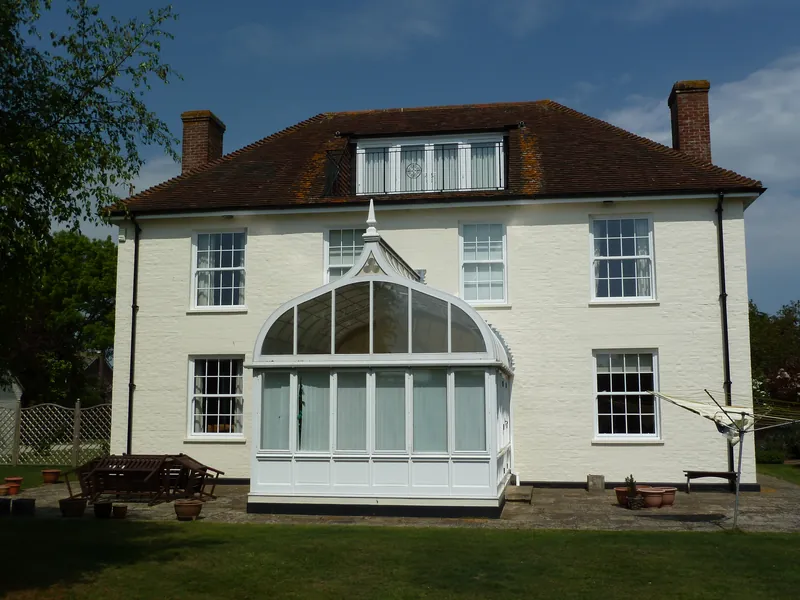
An Edwardian conservatory has a square or oblong floor plan and a ridged roof that slopes down on all sides. Unlike a Victorian design, it has no rounded bay at the front. That flat front wall gives you more usable floor space. A table, sofa or play area fits into the corners with ease.
The style suits both period homes and new builds. It looks smart on its own, and it can be joined with other shapes to make a P-shape or T-shape room. All our work is fitted by FENSA registered installers and comes with a 10-year guarantee. You can see every style we offer on our main conservatories page.
Why People Choose the Edwardian Style
The square shape is the main draw. It makes the best use of the space you have, with no wasted curves. Other reasons people pick it include:
- A high roof: the ridged roof gives a lofty, open feel inside.
- Easy to furnish: straight walls make it simple to lay out a dining table or a lounge.
- A timeless look: the clean lines fit in with most house types.
- Room to grow: the design can be stretched in length or width to suit your garden.
How does it compare with a Victorian design? A Victorian conservatory has a bay front with three or five facets and a pointed roof. It looks ornate, but the curves take up floor space. An Edwardian room of the same size gives you more room to sit, eat or work. It is also simpler to fit blinds, as each pane is a plain, square shape. If you like a classic look but want a practical room, the Edwardian style is a sound choice.
If your garden is small or you have a bungalow with a low eave, a lean-to conservatory may suit better. If you want more glass and less frame, look at a glass extension.
Roof Options
The roof shapes the whole feel of the room. You can choose from three main types:
- Glass roof: the classic choice. Modern solar control glass cuts glare and keeps the room cooler in summer.
- Solid tiled roof: an insulated warm roof with a plastered ceiling. The room feels like part of the house and stays warm in winter.
- Hybrid roof: solid sections with glass panels, or a solid roof with a roof lantern in the centre.
Roof finials and a decorative ridge can be added for a period touch. Inside, you can pick a white or wood-look finish for the roof bars, and add downlights or a ceiling fan.
Frames, Glass and Base
The frame holds the whole room together. We offer three main frame types:
- uPVC: low upkeep, warm and good value. It comes in white and a wide range of colours and wood-grain finishes.
- Aluminium: strong and slim, so you get more glass and less frame. It suits a modern look.
- Timber: a natural, traditional look for period homes. It needs painting from time to time.
We fit double glazed sealed units with low-E glass and argon gas as standard. Wall glass will reach a centre pane U-value of around 1.2 W/m²K. You can choose a low dwarf wall in brick to match your home, or full height glass for the most light.
Every conservatory sits on a proper base. We dig and pour a concrete footing, build up the dwarf walls or base, and add a damp proof course. A good base stops the room from moving, cracking or getting damp.
Planning and Building Regulations
Many Edwardian conservatories can be built under permitted development, so you do not need planning permission. That depends on the size, height and where it sits on your home. For example, it should not cover more than half the garden or face a road at the front. Rules are stricter for listed homes and homes in conservation areas.
Most conservatories are exempt from Building Regulations if they are under a set size, are separated from the house by an external door, and have their own heating control. If you want to take out the wall or doors between the house and the room, Building Regulations do apply. We check all of this at the survey and tell you what is needed before you commit.
What Drives the Cost of Edwardian Conservatory
Each Edwardian conservatory is made to measure, so we do not give fixed prices online. These are the main cost drivers:
- Size: a bigger floor area needs more frame, glass, roof and base.
- Roof type: solid and hybrid roofs cost more than glass.
- Frame material: aluminium and timber cost more than uPVC.
- Dwarf wall or full glass: a brick wall adds building work.
- Doors: French doors cost less than a wide set of bi-folds.
- Extras: lanterns, lights, heating, flooring and blinds all add to the total.
- Site: sloping ground, drains in the way or poor access can add work.
After a free survey, you get a written, fixed quote with no hidden extras. It also sets out the payment stages. Ask for yours on our get a quote page.
How We Build It
The build has a clear order: base, walls, frames, roof, then the finishing touches. Most jobs take a week or two on site once the frames are ready. Our how we work page explains every step, from the free survey through to aftercare.
Keeping It in Good Shape
An Edwardian conservatory needs little care. Clean the frames with warm, soapy water a few times a year. Wash the glass inside and out. Clear the gutters each spring and autumn, and check the seals once a year. On timber frames, repaint or re-stain when the finish starts to wear.
If you want a room that feels more like a solid part of the house, you might also look at a garden room.
Frequently Asked Questions
Can you choose the interior look of an Edwardian conservatory?
Yes. You choose the frame colour inside and out, the roof finish, the floor and the lighting. You can add a plastered ceiling with a solid roof, downlights, a fan, blinds and wall sockets. Many people pick a floor that runs through from the house so the two rooms feel joined. We talk through all the choices at the survey and design it with you.
What materials are used for Edwardian conservatories?
The frames are made from uPVC, aluminium or timber. uPVC is the most common, as it is warm, low upkeep and good value. Aluminium gives slimmer frames, while timber suits period homes. The walls are glass, often on a brick dwarf wall. The roof can be glass, solid tiles or a mix of both. Glass is double glazed with low-E coatings.
Does an Edwardian conservatory add value to a home?
A well built conservatory adds usable living space, and buyers like extra rooms. A room you can use all year, with a good roof and proper heating, will appeal far more than one that is too hot or too cold. The size, quality and how well it suits the house all matter. A local estate agent can tell you more about homes on your street.
Is planning permission needed for an Edwardian conservatory?
Often not. Many conservatories fall under permitted development, as long as they meet limits on size, height and position. You will need permission if your home is listed or the rules have been removed, and rules are tighter in conservation areas. Building Regulations may apply if you take out the wall to the house. We check this at the survey.
What upkeep does an Edwardian conservatory need?
Very little. Wash the frames with warm, soapy water a few times a year and clean the glass when it needs it. Clear leaves from the gutters in spring and autumn. Check the seals and roof flashing once a year. Timber frames need repainting every few years. Keep vents clear so the room can breathe and stay fresh.
To see the rest of our services, visit our home page.