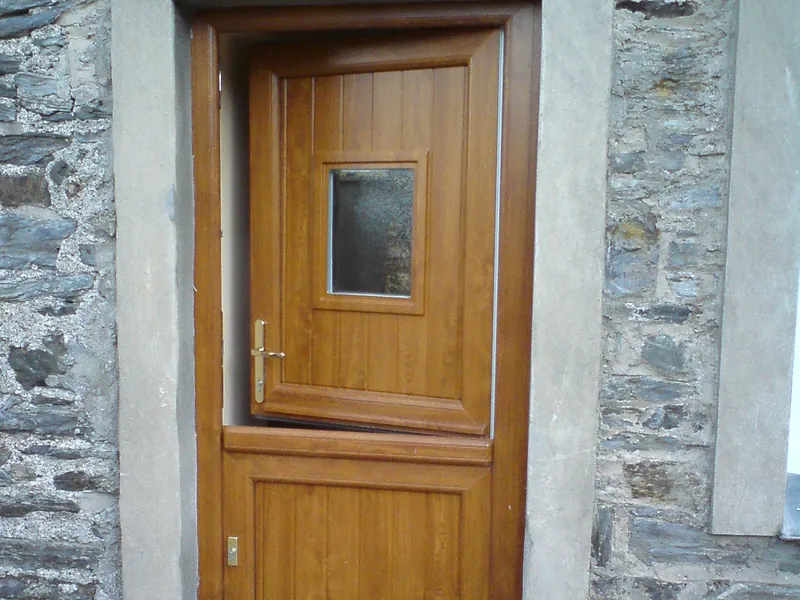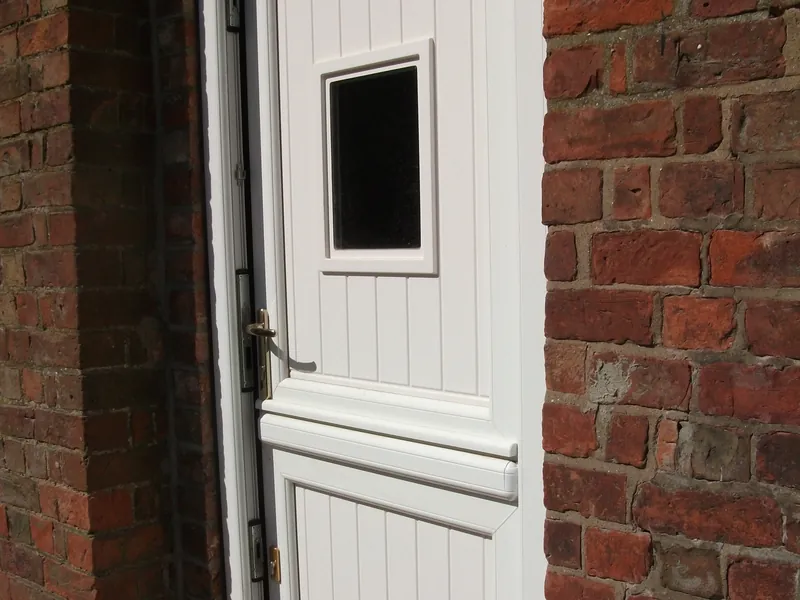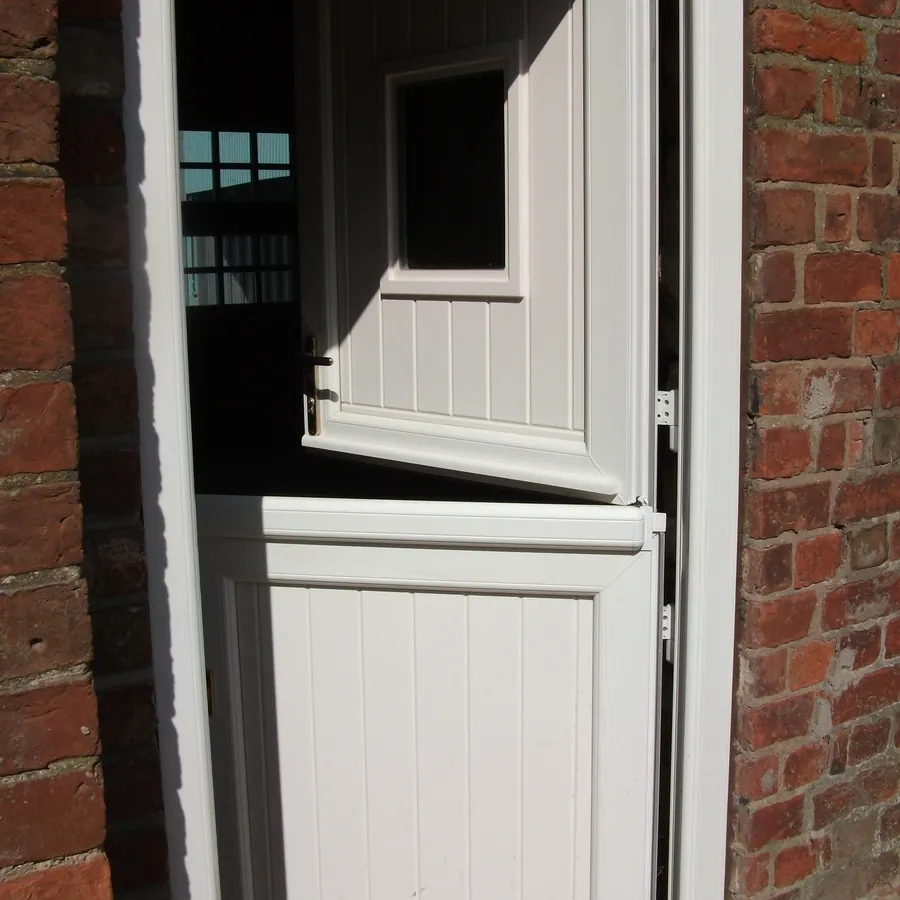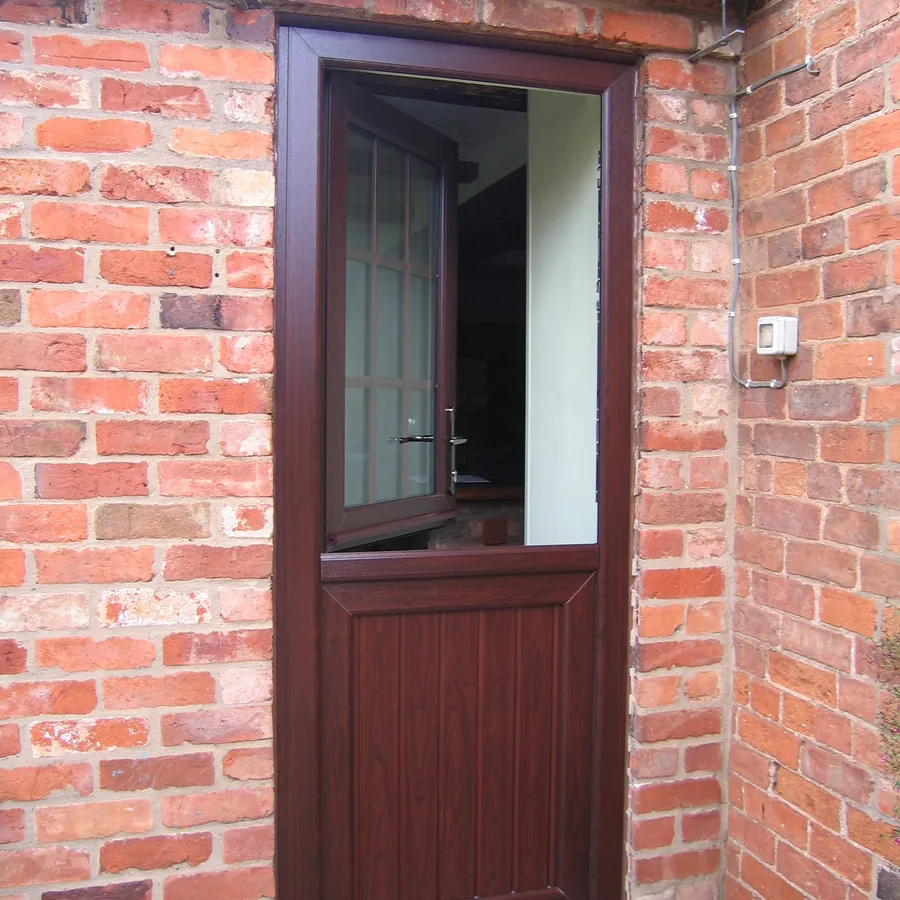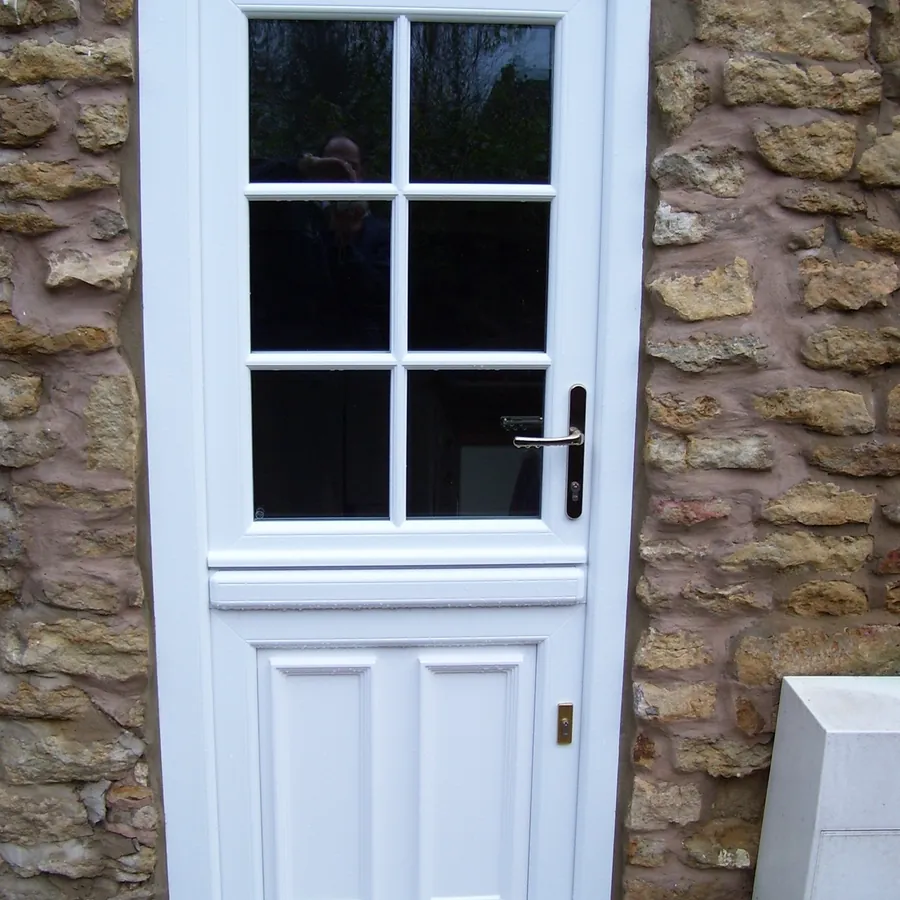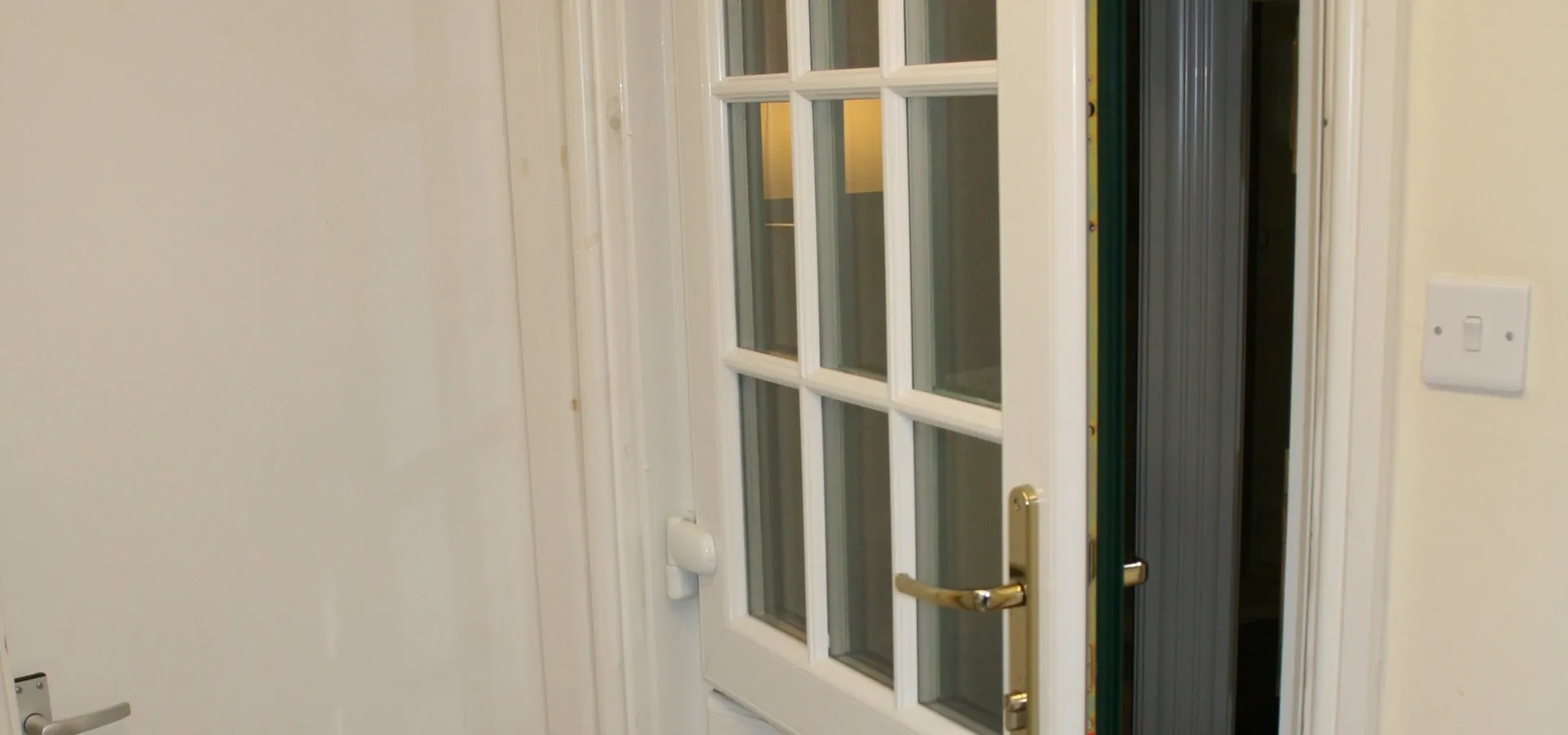
We make and fit double glazed stable doors in Clerkenwell. A stable door is split across the middle, so the top half opens while the bottom half stays shut. It suits homeowners who want fresh air and light at the back or side of the house, while keeping children, pets and the weather where they belong. You get a made-to-measure door, fitted by our own team, with a 10-year guarantee.
When both halves are locked together, a stable door works just like a normal door. It seals, locks and keeps heat in. We fit them in composite, uPVC and aluminium, and sign off every job as a FENSA registered installer.
Stable doors are part of our wider double glazing service. For other back and side door styles, see our full range of double glazing doors.
What a Stable Door Is and Who It Suits
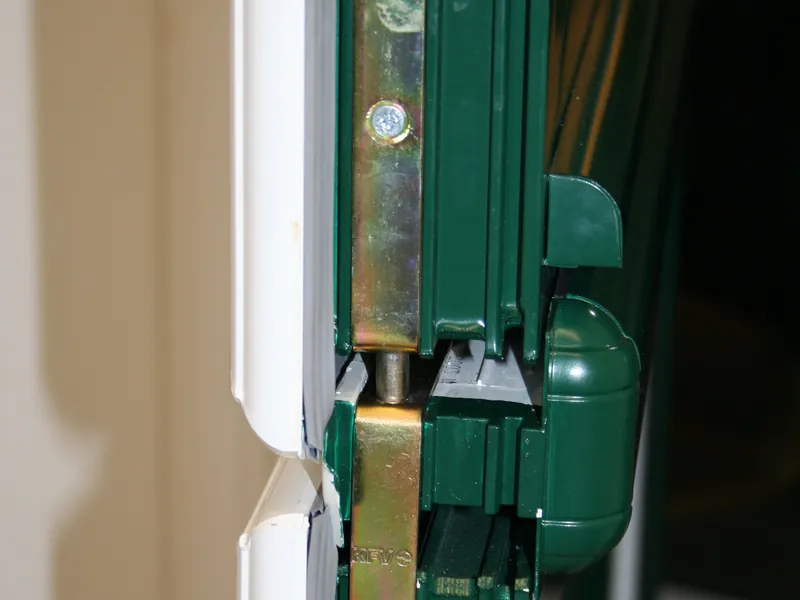
A stable door has two leaves hung in one frame, one above the other. Each half has its own hinges. A bolt or a linking lock joins them so they open as one when you want. Slide the bolt and the top half swings open by itself.
Stable doors work well for:
- Families with young children. Open the top for air while the bottom stops toddlers wandering out.
- Dog and cat owners. Let in the breeze without letting the pets out.
- Kitchens. Clear steam and cooking smells without opening a window.
- Cottages and farmhouses. The classic look suits older and rural homes.
- Utility rooms and side doors. Pass things in and out without opening the whole door.
They also make a friendly front door. You can chat to a neighbour or take a parcel over the bottom half.
Materials and Styles
We fit stable doors in three materials.
Composite stable doors
Composite doors have a solid core and a tough GRP skin with a woodgrain finish. They look like painted timber but will not warp, rot or need painting. They are thick, heavy and very secure. This is our most popular stable door.
uPVC stable doors
uPVC doors are lighter and lower in cost. The frames are steel reinforced and need little care. They come in white, cream, grey and woodgrain foils. See our uPVC doors page for the full range.
Aluminium stable doors
Aluminium gives a slim, strong, modern door in almost any RAL colour. A thermal break keeps the heat in. Read more on our aluminium doors page.
For style, you can choose a plain, ledged cottage door, a glazed top half, or a panelled design. Many people pick a glazed top to let more light into the kitchen. Add a cat flap, a letter plate or a matching side panel if you need one. We can also match the colour to your double glazing windows.
Security and Locking
A split door needs good locks on both halves. Our stable doors come with:
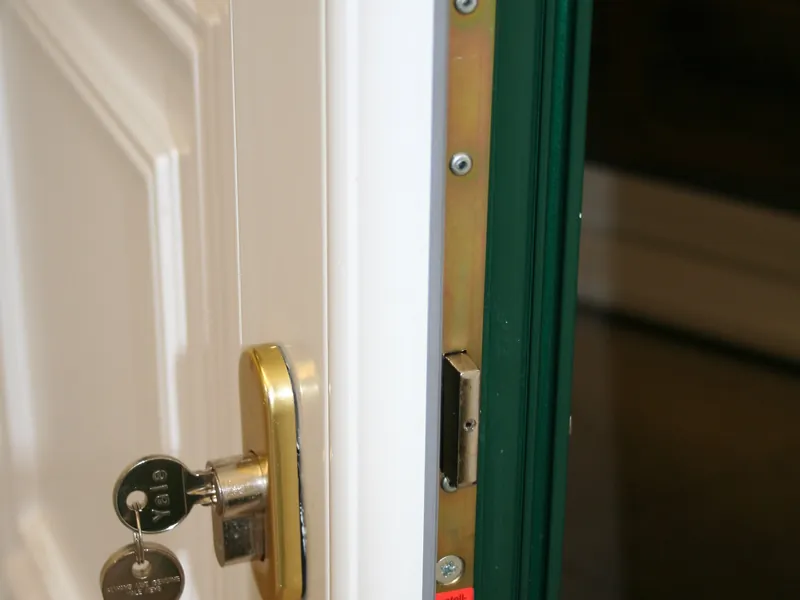
- A multi-point lock on the bottom half, with hooks along the edge
- A linking bolt or lock that joins the two halves firmly
- Shoot bolts or a separate lock on the top half
- Anti-snap cylinders
- Toughened safety glass held in from the inside
- Hinge-side security pins on both leaves
When the halves are locked together, the door is as secure as a standard back door. Many of our composite stable doors are tested to PAS 24. Ask us at the survey which models meet it.
Keeping the Heat In
A common worry is that a split door lets in draughts. A well-made stable door does not. The two halves meet with a deep rebate and a weather seal along the middle. A drip bar on the bottom half sheds rain away from the joint.
The glass is a double glazed unit with argon gas and a low-E coating. Composite doors also have an insulated core. Every door we fit meets the Part L limit of 1.4 W/m²K for a new door in an existing home. Keep the seals clean and the door will stay snug through the winter.
How We Make and Fit Your Stable Door
We start with a free survey. We measure the opening, check the frame, step and lintel, and talk through style, colour and locks. You then get a written, fixed quote. Once you agree, your door is made to measure.
On fitting day, we take out the old door and frame. We fit and seal the new frame, hang both halves, and set the locks so they line up. We test the top half on its own and both halves together. Then we finish the edges and clear up. Most stable doors are fitted in half a day.
You can read the full journey from survey to after-care on our how we work page.
What Affects the Cost of a Stable Door
We do not list fixed prices, as each door is built to order. These are the main cost drivers:
- Material. Composite and aluminium cost more than uPVC.
- Design. Glazed tops and panelled styles cost more than plain doors.
- Colour. Dual colours and special shades add to the price.
- Hardware. Extra locks, premium handles and knockers cost more.
- Add-ons. Cat flaps, side panels and top lights add to the total.
- Opening work. A worn sill, step or lintel adds labour.
Every job gets a written, fixed quote after a free survey, with the payment stages set out. To book yours, request a quote.
Building Regulations and Upkeep
A new stable door counts as building work. It must meet Part L for heat loss, and any glass must be safety glass. As a FENSA registered installer, we self-certify the work and you get a certificate at the end. Keep it with your house papers for when you sell.
A like-for-like back door does not normally need planning permission. Listed buildings and homes in conservation areas may have extra rules on style. We will flag this at the survey.
Upkeep is simple:
- Wash the door and frame with warm soapy water every few months.
- Wipe the middle seal so grit does not build up.
- Oil the locks, bolts and hinges once a year.
- Keep the drain slots at the base clear.
- Call us if the halves stop lining up. A hinge tweak sorts it.
Frequently Asked Questions
Are stable doors suitable for all types of homes?
Stable doors suit most homes. The classic cottage look fits older and rural houses, while a slim aluminium or flush composite door suits modern homes. They work best as back, side or kitchen doors, though many people use them at the front too. We check the opening at the survey and help you pick a style that suits your house.
How secure is a stable door?
Very secure. The bottom half has a multi-point lock, and a linking bolt joins both halves when they are shut. The top half has its own bolts or lock. We fit anti-snap cylinders, hinge-side pins and toughened glass held in from the inside. Locked together, a stable door is as secure as a standard back door.
What maintenance does a stable door need?
Very little. Wash the door and frame with warm soapy water a few times a year. Pay attention to the seal where the halves meet, and wipe away any grit. Oil the locks, bolts and hinges once a year. Keep the drain slots clear. If the two halves stop lining up, call us and we will adjust the hinges.
Can a stable door be fitted in a flat?
Yes, if the door opens onto a garden, balcony or private side path. A stable door is not usually right for a door that opens onto a shared hallway, as fire rules may apply. Flats can also have lease terms on doors and windows. Check with your freeholder or managing agent, and we will advise at the survey.
Are stable doors warm in winter?
Yes. A good stable door has a deep rebate and a weather seal where the halves meet, plus a drip bar to keep rain out. The glass is argon-filled and low-E coated, and composite doors have an insulated core. Every door we fit meets the Part L limit for new doors, so the room stays warm.