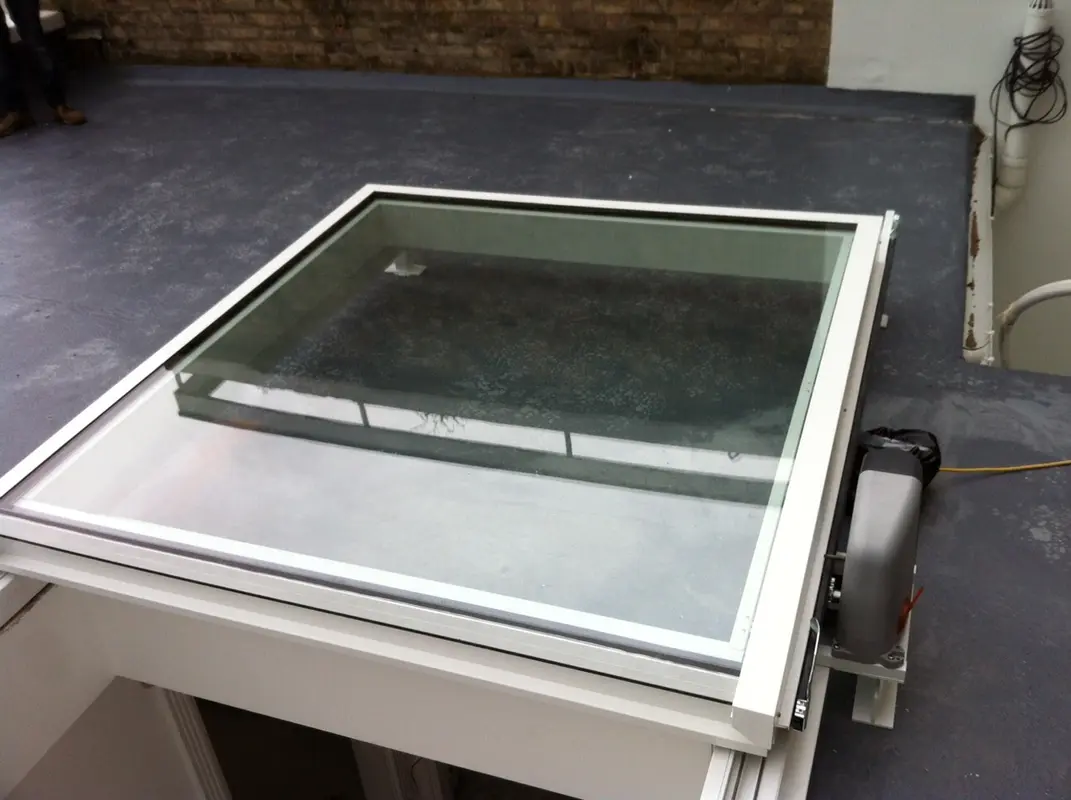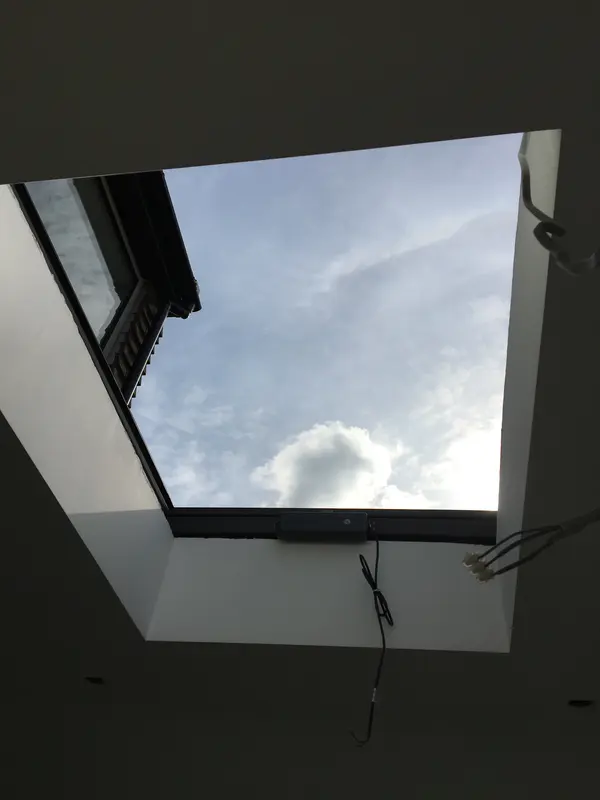
We supply and fit conservation rooflights in Clerkenwell, for period homes, listed buildings and houses in conservation areas. A conservation rooflight is a slim, low-profile roof window built to look like the cast iron skylights of the Victorian era. This page is for homeowners who want more daylight in a loft or top floor without spoiling an old roof. You will learn about the types we fit, how they are made, the planning rules and what drives the cost.
All our work comes with a 10-year guarantee. For other roof glazing, see our full skylights range, or go back to our double glazing home page.
What Makes a Rooflight a Conservation Rooflight
A standard roof window sits proud of the tiles, with a chunky frame and a wide flashing. On a period roof it can look out of place. A conservation rooflight is made to blend in. Key features are:
- Low profile: the frame sits down among the slates or tiles, almost flush with the roof.
- Slim steel or aluminium frame: thin sight lines, often in black or dark grey, like the old cast iron lights.
- Vertical glazing bar: a central bar that copies the look of the originals.
- Hidden flashing: the weather seal sits under the slates, so little metal shows.
- Modern glass: double glazed units with low-E coating, so it is warm as well as handsome.
The aim is that, from the street, it looks like it has always been there.
Types and Opening Options
We fit conservation rooflights in a range of sizes and styles to suit the roof and the room below.
- Top hung: hinged at the top and opened outwards from the bottom with a winding arm or stay.
- Side hung: hinged on one side. Larger sizes can serve as an escape or access hatch to the roof.
- Fixed: no opening sash, for light only, often used over stairs.
- Multi-bar: two or more glazing bars for a wider light that still looks period.
- Electric opening: a hidden motor with a remote and a rain sensor that closes the light when it rains. See our electric skylights page for how the motors work.
Conservation rooflights are made for pitched roofs, usually between about 15 and 60 degrees. For a flat roof over an extension, our flat roof skylights are the better fit.
How Conservation Rooflights Are Made
Each rooflight is built to a set or custom size and to the pitch of your roof. The best ones use a steel or aluminium frame on a timber or composite kerb.
A standard unit includes:
- a powder coated steel or aluminium frame in black, grey or a heritage colour;
- a double glazed unit with argon gas, a warm edge spacer and a low-E coating;
- a toughened outer pane and a laminated inner pane for safety overhead;
- an internal lining in white or a natural finish;
- gaskets and drained channels that carry rain away;
- a flashing kit sized for slate or plain tile.
Most units have a whole-unit U-value well inside the Building Regulations limit for roof windows. Some makers offer triple glazing or solar control glass for south-facing slopes that get very warm in summer.
Planning, Listed Buildings and Building Regulations
Rooflights on old homes need more care with the rules than most window jobs.
- Listed buildings: you need listed building consent for any new rooflight. A conservation rooflight is often the only kind a council will accept.
- Conservation areas: a new rooflight on the front slope, or any slope seen from the road, may need planning permission. Some streets have an Article 4 direction that removes the usual rights.
- Other houses: rooflights are often allowed as permitted development, as long as they do not stick out more than 150mm from the roof plane and are not higher than the ridge.
All rooflights must meet Building Regulations for heat loss, safety glass and, in a loft room, fire escape. Cutting rafters to fit a new light also needs to be checked. We can supply the product details and drawings the council asks for and help you with the application.
How We Fit Conservation Rooflights
Fitting a rooflight means working on the roof and the structure, so we plan each job with care.
- We set up safe access, with scaffold or a tower where needed.
- We strip the slates or tiles from the area and keep them for reuse.
- We cut the opening and add trimmers to the rafters to carry the load.
- We fit the rooflight to the right depth so it sits low in the roof.
- We fit the flashing and lay the slates or tiles back round it.
- We line the reveal inside, ready for plaster and paint.
Most single rooflights take one or two days, weather allowing. The full process from survey to after-care is on our how we work page.
What Drives the Cost of a Conservation Rooflight
We do not publish fixed prices, because every roof and room is different. The main factors are:
- Size: larger lights need more frame, glass and roof work.
- Frame: steel costs more than aluminium.
- Opening type: fixed lights cost least; electric opening costs more.
- Glazing bars: more bars mean more work.
- Glass: triple glazing, solar control or self-cleaning glass.
- The roof: slate, plain tile and steep pitches all change the fitting time.
- Structure: trimming rafters or fitting new joists.
- Access: scaffold for high or awkward roofs.
- Inside finish: plaster, lining and decoration.
Every job gets a written, fixed quote after a free survey, with the payment stages set out in it. You can ask for your quote here.
Choosing the Right Rooflight
A few points help you pick the right one:
- Size and light: a light on a roof lets in far more daylight than a wall window of the same size. Smaller often works.
- Position: line the light up with windows below, or with the room layout, for a neat look.
- Use: pick an opening light where you need fresh air, such as a bathroom or bedroom.
- Reach: a high light is easier with an electric opener or a pole.
- Rules: check first if you are in a conservation area or your home is listed.
Conservation rooflights also work well on garden rooms and period-style roofs. If you are planning an orangery, we can fit roof lanterns or rooflights to match.
Looking After Your Rooflight
- Clean the glass inside and out a few times a year with a soft cloth and mild soap.
- Clear leaves and moss from round the frame and the gutter below it.
- Check the flashing after storms.
- Oil the hinges and the winding gear once a year.
- Test the rain sensor on electric lights each season.
Frequently Asked Questions
How much light does a conservation rooflight let in?
A great deal for its size. Glass in a roof faces the sky, so it lets in more daylight than a wall window of the same size. Even a small rooflight can light a dark loft, landing or bathroom. The slim frame and single glazing bar keep the glass area large. We help you choose a size that gives good light without overheating the room.
Do conservation rooflights need special materials?
The best ones use a slim steel or aluminium frame, powder coated in black or grey, with a central glazing bar. They sit low in the roof with hidden flashing. Councils often ask for this style on listed homes and in conservation areas. The glass is modern double glazing with a toughened outer pane and a laminated inner pane for safety.
Can conservation rooflights go on listed buildings?
Yes, with listed building consent. Councils often accept a conservation rooflight where they would refuse a standard roof window, as long as the size and position suit the roof. The rooflight should usually sit on a slope that is not seen from the street. We can supply product details and drawings for your application and advise on what is likely to be accepted.
What upkeep does a conservation rooflight need?
Very little. Clean the glass a few times a year with mild soap and a soft cloth. Clear leaves and moss from round the frame so rain can drain away. Oil the hinges and winding gear once a year. After a storm, check the flashing. On electric lights, test the rain sensor each season so it closes when it should.
How do you choose the right size of rooflight?
Start with the room and the roof. Measure the space between rafters, as a light that fits between them avoids cutting the structure. Think about how much light you need and where the light will fall. In a loft bedroom, check if the light must serve as a fire escape. We measure everything at the survey and suggest a size that suits both.