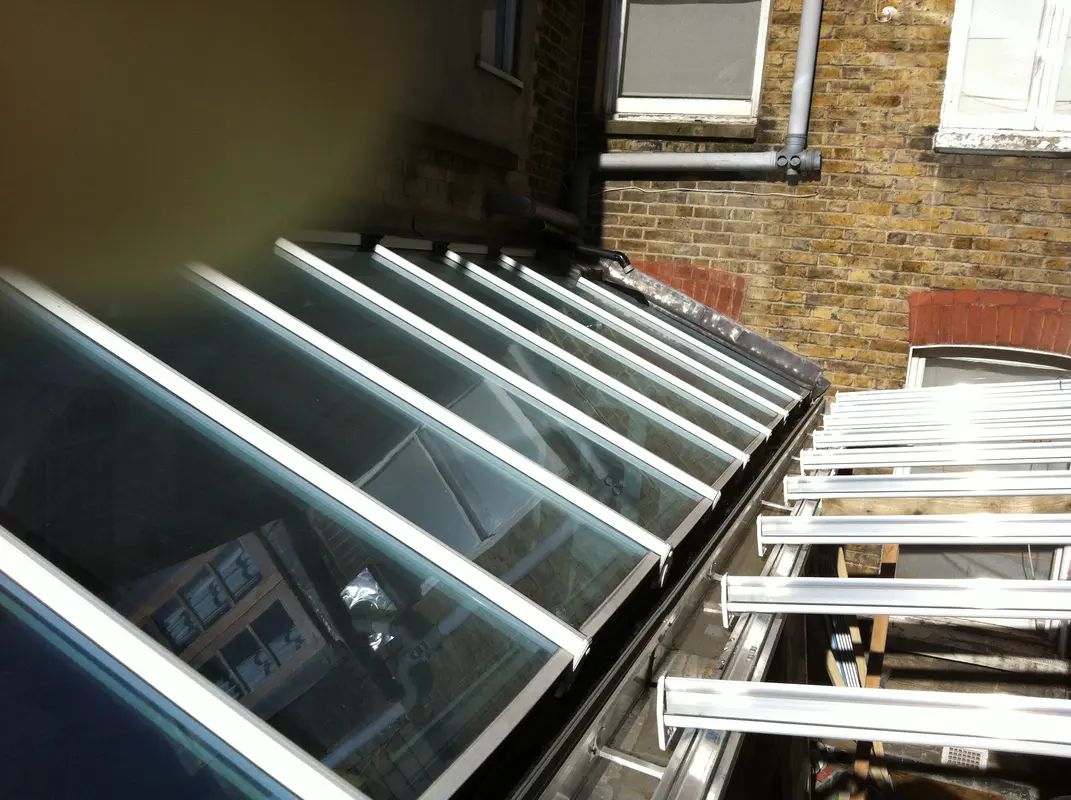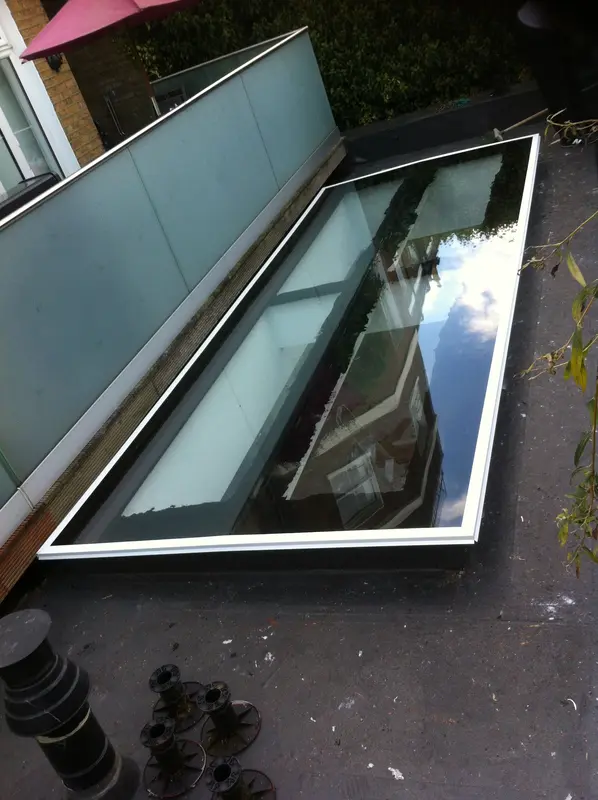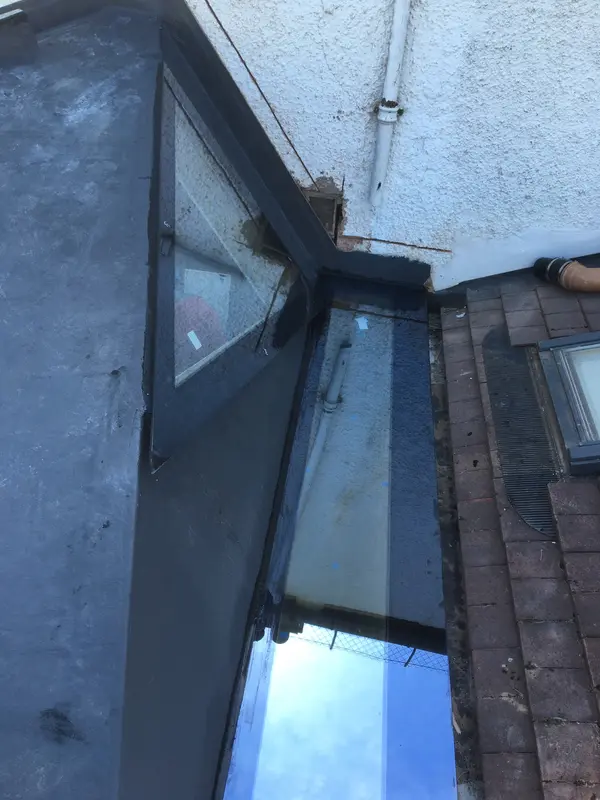
We supply and fit every type of skylight in Clerkenwell, from small roof windows in a loft to large glass lanterns over a kitchen. This page is for homeowners who want more daylight and are not sure which roof light suits their home. You will find each type explained, what to check on your roof, and what affects the cost.
Skylights sit alongside our main double glazing service. The same rules on glass, heat and safety apply, but a roof window works harder than a wall window. It faces the sky, takes the rain head on and gets the full heat of the sun. That is why the choice of product and the quality of fitting matter so much.
Types of Skylight We Fit
Each type below has its own page with more detail. Start with the roof you have: pitched or flat, and whether the room below is a loft, an extension or a dark hallway.
Velux Windows and Pitched Roof Windows
A roof window sits in the slope of a pitched roof, in line with the tiles or slates. It is the usual choice for loft rooms, attic bedrooms and top-floor landings. You can have centre-pivot windows, which turn for easy cleaning, or top-hung windows, which open out for a clear view and can serve as an escape route. Our page on Velux windows covers sizes, opening types and blinds.
Flat Roof Skylights
Flat roofs on rear extensions and garages often leave the room below dark. A flat roof skylight fixes that with a single sheet of glass on a raised upstand. Fixed units give a clean, frameless look from inside. Opening units add fresh air. The glass is set at a slight fall so rain runs off. Read more on our flat roof skylights page.
Roof Lanterns
A roof lantern is a raised glass structure, like a small glass roof, that sits on a flat roof. It pulls light down from every angle and makes a kitchen or living space feel taller. Lanterns suit open-plan extensions and orangery-style rooms. They come in aluminium frames, often in grey, black or white. See our roof lanterns page for shapes and sizes.
Electric Skylights
An electric skylight opens and closes at the touch of a button or a wall switch. Many come with a rain sensor that shuts the window when the weather turns. They are handy where a window is out of reach, such as over a stairwell or a high ceiling. Some can be linked to a smart home system. Our electric skylights page explains the options.
Conservation Rooflights
A conservation rooflight is made to look like the cast iron roof windows found on Victorian and Edwardian homes. It sits flush with the roof, has slim black frames and often a centre glazing bar. Planners in conservation areas often ask for this style. Inside, you still get modern double glazing. Learn more on our conservation rooflights page.
Sun Tunnels
A sun tunnel is a tube with a mirror-like lining that carries daylight from a small dome on the roof down to a ceiling diffuser. It works where a full skylight cannot, such as a windowless bathroom, an inner hallway or a box room under a loft. It brings in light but no view. Read our sun tunnels page for how they are fitted.
Choosing the Right Skylight for Your Roof
The roof decides a lot of the choice for you. Here is a quick way to narrow it down:
| Your roof and room | Best fit |
|---|---|
| Pitched roof, loft room | Roof window |
| Pitched roof, period home in a conservation area | Conservation rooflight |
| Flat roof, small extension | Flat roof skylight |
| Flat roof, large kitchen or living space | Roof lantern |
| Hard-to-reach window | Electric skylight |
| No direct roof space above the room | Sun tunnel |
Then think about what the room needs:
- Light only: a fixed skylight or sun tunnel.
- Light and fresh air: an opening roof window or vented flat skylight.
- Light and a view: a larger roof window or a lantern.
- A way out in a fire: a top-hung escape roof window in a loft room.
Where the skylight goes in the room matters as much as the type. Light from above spreads widely, so one well placed unit can do the work of two wall windows. Over a kitchen island or a dining table, it lights the spot where you spend the most time. In a loft, placing the window low enough to see out when you stand makes the room feel far less boxed in. Two smaller roof windows side by side often give a better spread of light than one large one. We mark out the best spot with you at the survey.
Roof pitch matters too. Most roof windows suit pitches from about 15 to 90 degrees. Below that, a flat roof product is the safer choice. The survey confirms the pitch, the roof structure and where the rafters run.
Glass, Heat and Light
A skylight lets in far more light than a wall window of the same size, because it faces the open sky. That is the upside. The downside is that it also takes more sun in summer and loses more heat at night.
Good glass deals with both. Look for:
- Low-E coated double or triple glazing to keep heat in during winter.
- Solar control glass to cut glare and heat gain on south-facing slopes.
- Laminated inner pane so the glass holds together if it breaks.
- Toughened outer pane to resist hail and knocks.
- Self-cleaning coating on the outside, which helps rain wash dirt away.
Blinds help as well. Blackout blinds suit bedrooms. External awning blinds stop heat before it reaches the glass, which works better than an inside blind on a hot day.
Roof windows and rooflights have their own U-value limits under Part L of the Building Regulations. A good modern unit with low-E double glazing will meet them with room to spare, and we confirm the figure for your product on the quote. Our guide to energy efficient windows explains ratings and coatings in more depth.
Planning Permission and Building Regulations
In most houses, you can add a roof window under permitted development. The main limits are:
- It must not stick out more than 150mm from the roof slope.
- It must not sit higher than the highest part of the roof.
- A side-facing window must be obscure glazed and fixed shut below 1.7 metres from the floor.
Flats, listed buildings and homes in conservation areas follow different rules. A rooflight on a front slope in a conservation area may need consent. A listed building will need listed building consent for most changes. Our page on listed buildings and conservation areas explains what to check.
Building Regulations nearly always apply, as you are cutting into the roof. The rules cover the strength of the roof, fire safety, heat loss and, in loft rooms, the means of escape. We fit to these rules and can advise if the job needs a building control visit through Islington Council.
What Drives the Cost of Skylights & Roof Lights
We do not quote fixed prices online. No two roofs are the same. These are the main things that move the price:
- Type and size. A small roof window costs far less than a large lantern.
- Opening style. Fixed units cost less than manual or electric opening ones.
- Glass. Triple glazing, solar control and laminated panes all add to the cost.
- Roof structure. Cutting a rafter means adding a trimmer, which adds labour.
- Roof covering. Slate, plain tile and some flat roof finishes take more time to make good.
- Inside finish. Plastering and lining the reveals is extra work.
- Access. Scaffold or a tower is often needed for safe work at height.
Every job gets a written, fixed quote after a free survey. You can book a free survey and quote online.
Fitting, Flashing and Upkeep
A skylight is only as good as its seal to the roof. The flashing kit is the metal or rubber collar that sends rain round the frame and back onto the roof. It must suit the roof covering, whether that is tile, slate or a flat membrane. We use the maker's own flashing and fit it to their guide, so the product warranty stays valid.
On a flat roof, the upstand lifts the glass clear of standing water. It must be fully sealed into the roof finish. We check the falls, so rain drains away and does not pool against the frame.
Our full process, from survey to aftercare, is on our how we work page. In short, we survey, order to size, fit and seal, then make good inside. Work is backed by a 10-year guarantee.
Upkeep is light:
- Clean the glass a few times a year, or rely on a self-cleaning coat outside.
- Clear leaves and moss from round the flashing each autumn.
- Wash and vacuum the vent filter on opening roof windows.
- Test the rain sensor on electric units once a season.
Frequently Asked Questions
How do skylights affect room temperature in summer?
A skylight can make a room warmer on a sunny day, as it faces the sky. Solar control glass cuts the heat that gets through. An opening unit lets warm air escape from the top of the room. External blinds work best of all, as they stop the heat before it reaches the glass. Ask us about these at the survey.
Can roof lights be fitted on flat roofs?
Yes. Flat roof skylights and roof lanterns are made for this. They sit on an upstand that lifts them clear of the roof and lets rain drain away. The glass is set at a slight angle so water runs off. We check the roof deck and the finish first, as an old or soft roof may need repair before we fit.
Do skylights need planning permission?
Most houses can add a roof window without planning permission, as long as it does not stick out more than 150mm or sit above the ridge. Flats, listed buildings and homes in conservation areas may need consent. Building Regulations still apply in most cases. Check with your council, and we can help you with what to ask.
How much natural light will a roof light add?
Quite a lot. A roof light lets in much more light than a wall window of the same size, because it faces the open sky and is not shaded by nearby buildings. The exact gain depends on size, roof pitch, which way it faces and the glass. At the survey, we can suggest the size and spot that suits the room.
Can skylights reduce noise from rain and traffic?
Rain on glass can be noisy, but the right glass helps. Laminated glass damps the drum of rain. Thicker or triple glazed units cut traffic noise too. Roof windows with a sound-reducing pane are made for homes near busy roads or flight paths. Tell us at the survey if noise is a concern, and we will spec the glass to suit.