We supply and fit roof lanterns in Clerkenwell for flat roof extensions, kitchens and orangeries. If you want a glass roof that floods the room below with light and gives the ceiling some height, this page is for you. It covers the styles, the frame and glass choices, what drives the cost and how a lantern is fitted.
A roof lantern is a framed glass structure that sits on a flat roof. It rises above the roof line like a small pitched roof made of glass. From inside, it draws the eye up and makes the room feel taller. Every lantern we fit is installed by FENSA registered fitters and backed by a 10-year guarantee.
Roof lanterns are part of our wider double glazing service in Clerkenwell. To compare every roof glazing option, see our main skylights page.
Roof Lantern Styles
The shape of the lantern changes how it looks from the garden and how light falls into the room.
- Rectangular lanterns. The classic shape, with a ridge along the top and hipped ends. They suit long kitchen extensions.
- Square or pyramid lanterns. Four sloping sides that meet at a point. They make a strong centre piece over a dining table.
- Double hipped lanterns. A longer ridge with both ends sloped. A good choice for wide rooms.
- Contemporary low-profile lanterns. Slim aluminium bars and a shallow pitch. From inside you see more glass and less frame.
- Victorian-style lanterns. Decorative ridge crests and finials. These suit period homes and an orangery with a traditional look.
Frames, Glass and Colours
Most of our lanterns use aluminium frames. Aluminium is strong enough to carry large panes with thin glazing bars. It does not rot, warp or fade. Some ranges use a uPVC cover over an aluminium core, which suits homes with white uPVC windows.
Frames can be powder coated in a wide range of colours. Anthracite grey, black and white are the most popular. Many ranges offer a different colour inside and out, so the lantern can match your kitchen.
Glass choices include:
- Double or triple glazed units with a low-E coating and argon gas fill.
- Solar control glass to cut heat and glare on sunny roofs. Blue, grey and neutral tints are on offer.
- Self-cleaning glass that breaks down dirt so rain can rinse it off.
- Laminated inner panes for safety overhead.
Modern lanterns reach U-values well below the Part L limit of 2.2 W/m²K for new rooflights in existing homes.
Opening Vents
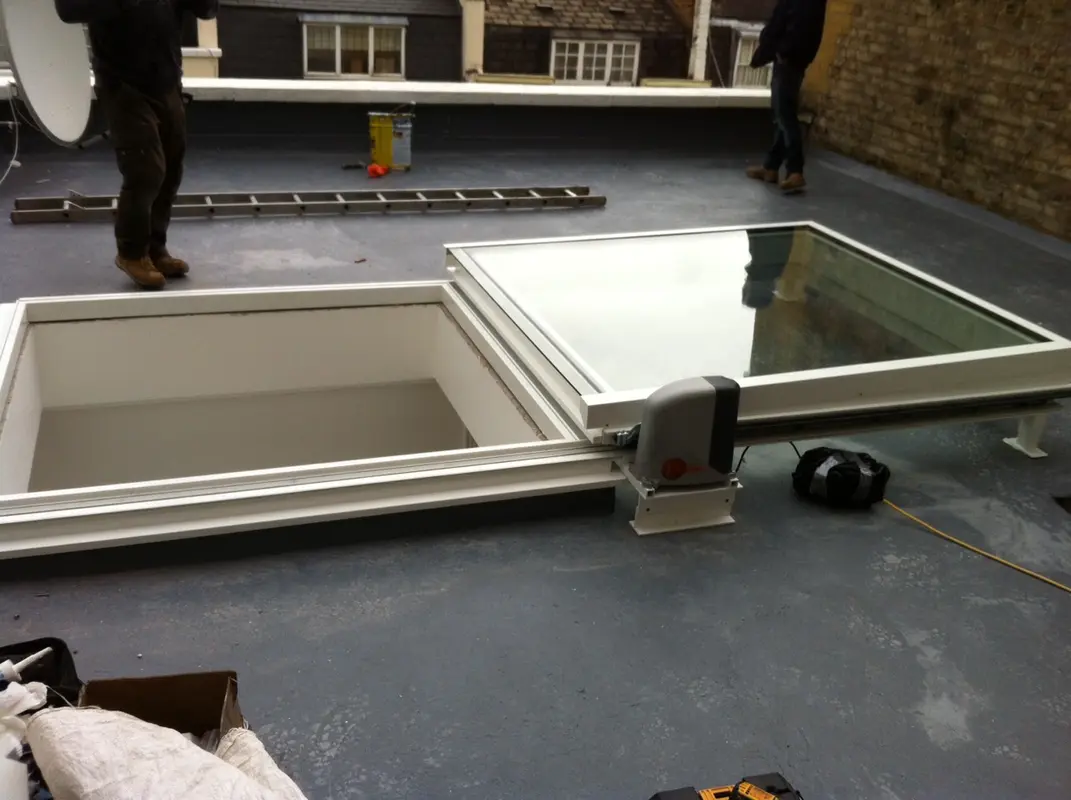
A glass roof can get warm on a sunny day. An opening vent lets hot air out at the highest point. You can choose a manual vent with a winding pole or an electric vent with a rain sensor. The sensor closes the vent as soon as it starts to rain. If you would rather keep the lantern fixed, an opening roof window elsewhere in the room can do the same job. See our pages on Velux windows and electric skylights for those options.
How a Roof Lantern Is Fitted
We start with a free survey to check the roof structure and measure the opening. You then get a written, fixed quote. Our full process, from survey to aftercare, is on our how we work page. Here is what happens on the roof.
- Form the opening. We cut the roof deck and add timber trimmers to carry the load around the gap.
- Build the upstand. A timber kerb is built at least 150 mm above the roof. This keeps water away from the frame.
- Seal the roof. The roof covering is dressed up and over the upstand. On a new extension, your roofer may do this step.
- Fit the frame. The lantern arrives in parts. We build the frame on the upstand, then fit the glass.
- Finish inside. We line and insulate the inside of the upstand, ready for plaster and paint.
Most lanterns are fitted in a day. Larger units, or jobs where we also build the upstand, can take two.
What Drives the Cost of Roof Lanterns
We do not publish prices, because every lantern is made to measure. You get a written, fixed quote after a free survey. You can book yours on our get a quote page. The cost depends on:
- Size. A bigger lantern needs more glass, more bars and more lifting.
- Shape. Pyramid and double hipped designs need more cuts and parts.
- Glass spec. Triple glazing, solar control and self-cleaning glass add to the cost.
- Frame colour. Dual colour frames or special shades may cost a little more.
- Vents. Manual and electric vents add parts, and electric vents need power.
- Roof work. Forming a new opening in an old roof takes more time than fitting to a ready-made upstand.
- Access. Large panes may need scaffold or extra hands to lift them safely.
Payment stages are set out in your written quote, so there are no surprises.
Planning and Building Regulations
A roof lantern on a single storey extension is often permitted development. Under permitted development, a rooflight must not stick out more than 150 mm from the roof plane. A lantern rises higher than that, so its height is often judged as part of the extension instead. If the lantern is part of a new extension, it is usually covered by that extension's approval. Flats, listed homes and homes in conservation areas need more checks. We advise you to speak to your council if you are not sure.
Building Regulations apply. The lantern must meet Part L for heat loss and use safety glass overhead. Building control may need to approve changes to the roof structure. We explain what your job needs at the survey.
Care and Upkeep
A roof lantern needs very little care. Here is what to do:
- Wash the glass two or three times a year with warm, soapy water. Use a soft brush on a pole from a safe spot.
- Clear leaves from the gutters and the upstand.
- Check the seals and caps along the bars for any gaps.
- Run opening vents now and then so the hinges stay free.
- Wipe the inside frame to keep dust off.
Never stand or kneel on the glass. If you see mist inside a sealed unit, call us to replace the pane.
Is a Roof Lantern Right for You?
A roof lantern is ideal when you want light and height in a room under a flat roof. It works best over the centre of a kitchen, dining space or living area. If the room is small, a flat skylight may do the job with less roof work. For a dark hall, landing or bathroom with loft space above, a sun tunnel is a smart, low-cost choice.
Frequently Asked Questions
Can roof lanterns be installed on flat roofs?
Yes, that is what they are made for. A roof lantern sits on a raised upstand built into a flat roof. We can fit one into an existing flat roof by cutting a new opening and adding trimmers to take the load. On a new extension, we can work with your builder so the upstand is ready for us. We check the joists at the survey.
Are roof lanterns suitable for all types of homes?
They suit most homes with a flat roof extension, from Victorian terraces to new builds. The frame colour and style can match the age of the house. Slim modern lanterns suit newer homes, while decorative ridges suit period ones. Listed homes and those in conservation areas may need consent, so we check this before we quote.
What maintenance do roof lanterns require?
Wash the glass two or three times a year and keep the gutters and upstand clear of leaves. Look along the glazing bars for any gaps in the seals. If you have opening vents, run them every few weeks so they do not stick. Self-cleaning glass helps cut down the work. Never climb onto the glass to clean it.
Do roof lanterns provide ventilation?
Only if you choose a lantern with opening vents. A fixed lantern lets in light but no air. A vent at the top lets warm air escape, which helps on hot days. Vents can be opened by pole or by a motor with a rain sensor. If you want a fixed lantern, a separate opening roof window can provide the air instead.
How long does it take to fit a roof lantern?
Most lanterns are fitted in one day once the upstand is ready. If we need to cut a new opening and build the upstand, the job may take two days. Made-to-measure lanterns take a few weeks to make after the survey. We confirm the time frame in your written quote, along with the fitting date.